Welcome to WordPress. This is your first post. Edit or delete it, then start writing!
Blog
-
Canadian Shipments to the EU Are Annoyingly Slow
I think the EU-based logistics, deliveries has pampered us to a point where more than 2 days delivery schedule feels like forever. I recently started motovlogging, and I noticed that the chest mount is not an amazing POV for the motovlogs. So, I decided to purchase a mount for my helmet that would give the better POVs, and would move with my head.
Now, I am not taking any names of the brands in this post as I do not want to make this blog seem like I am trying to bad word the brand itself. The post is a rant about the poor logistics from Canada to EU. Previously, I ordered a mobile case, and when you order a screen protector they send you two, but the delivery takes double the time as well. The problem now is not the brand, but the delivery. The problem back then was not the brand but the delivery providers. The logistics partners are really slowing the interaction here.
The order
This is my second time that I have ordered something from a Canadian business and it has been more than a week and I have no idea where the shipment is.
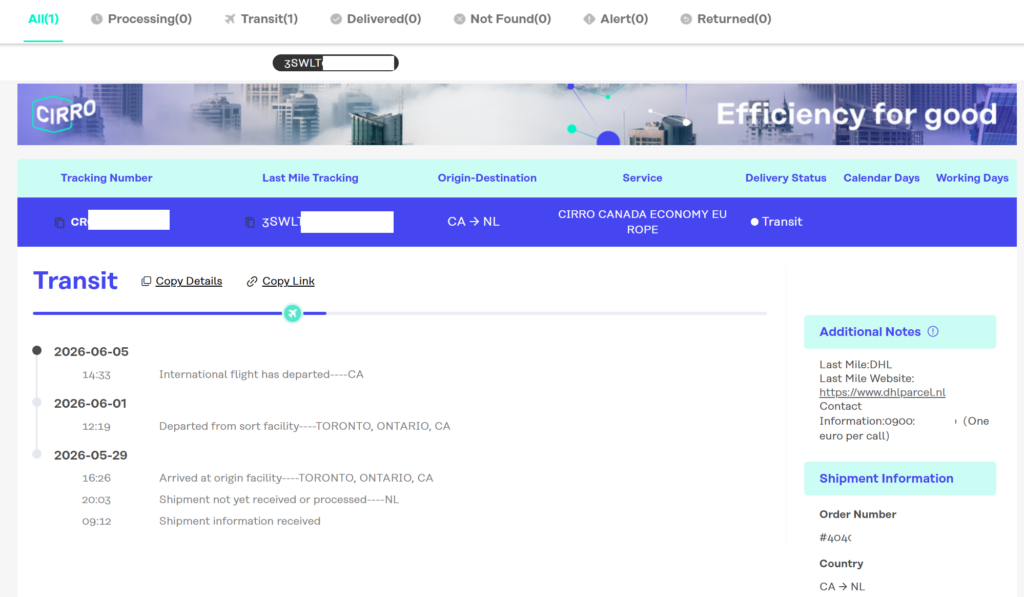
This order was placed on 29th May, and it departed their facility on 1st June. It took 4 more days for the flight to depart and now it has been 5 days that the next status was not shared. I am still waiting, whether the flight landed, or whether my parcel arrived.
At this point, I think it would have been faster if I had just booked a flight and went to pick up the order–but then again, I do not know how fast the postal services are in Canada. :shrug:
And now, I am just waiting for the mounts to arrive so I can capture some of the summer moments with the right POV and upload to my YouTube.
-
Launching iSha: Private Baby Tracker and Logs app
iSha: Pronounced as Aisha.
My daughter, Aisha, was born in 2022. As a new parent, I was very cautious over everything and I wanted to get an overview of what was happening, was I a good parent, were we being supportive for our 2 day old baby? I had a concern regarding Aisha’s health in the first week and I took a photo of Aisha. The photo was purposefully taken just to show the doctors whether my concerns were real or not, and what to do.
2 days later I was surfing my Photos app and I saw Aisha’s photo there. I would not have wanted this picture to make its way in such an environment, be cloud synced, or be leaked. It was at that day that I decided that I would make an application that would allow parents to track and share the data of their children in a controlled manner. And there is nothing as controlled as the one that does not interact with a server. Humans make mistakes, machines make worse mistakes. The app could potentially leak the data to a server, whether by human mistake or intention. The server could log the data, or someone else could get access to it. It is best to avoid this in the first place and make a conscious choice to only export the data that you require. Thus, effectively making an enclave for the data for your babies.
That idea turned into an app for parents, and today I happy to share that the application is ready to download and use.
The app
I started working on the app back in September 2022, and with the little time I could find to work, I would add one or two features that would mainly create the structure for the database to store the information but ensure that the data would be stored privately.
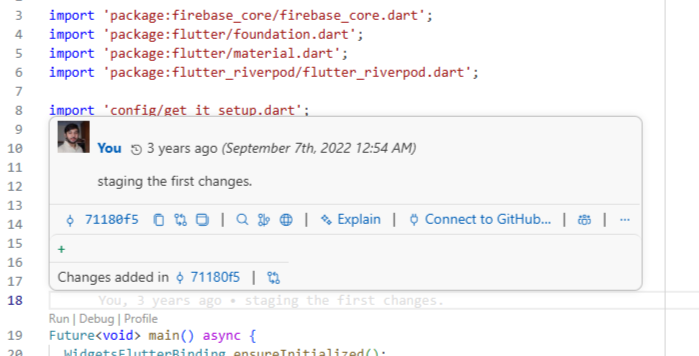
The project started on 7 Septembre 2022, and it took me about 3 years to publish the first version to Play Store. The objective of the application is very simple.
- Offer the parents with a simple to use application where they can log the data for their baby’s growth.
- Follow a guided, reminding flow for their babies. Where they can create reminders for their babies.
- The application must be private. The features must be modern and up to date.
- Offer data import/export services to allow parents to share the data that they would like to share with others.
The application is developed using Flutter, and offer services without creating an account. You will not need to create an account since there is no need to sync the data. As part of the roadmap, I am working on adding support to share the data from one device to another, one partner to another, and perhaps (if needed by the users) to share data with nannies and caretakers. However, since we will not support servers, the technical opportunities would need to be explored and decided on.
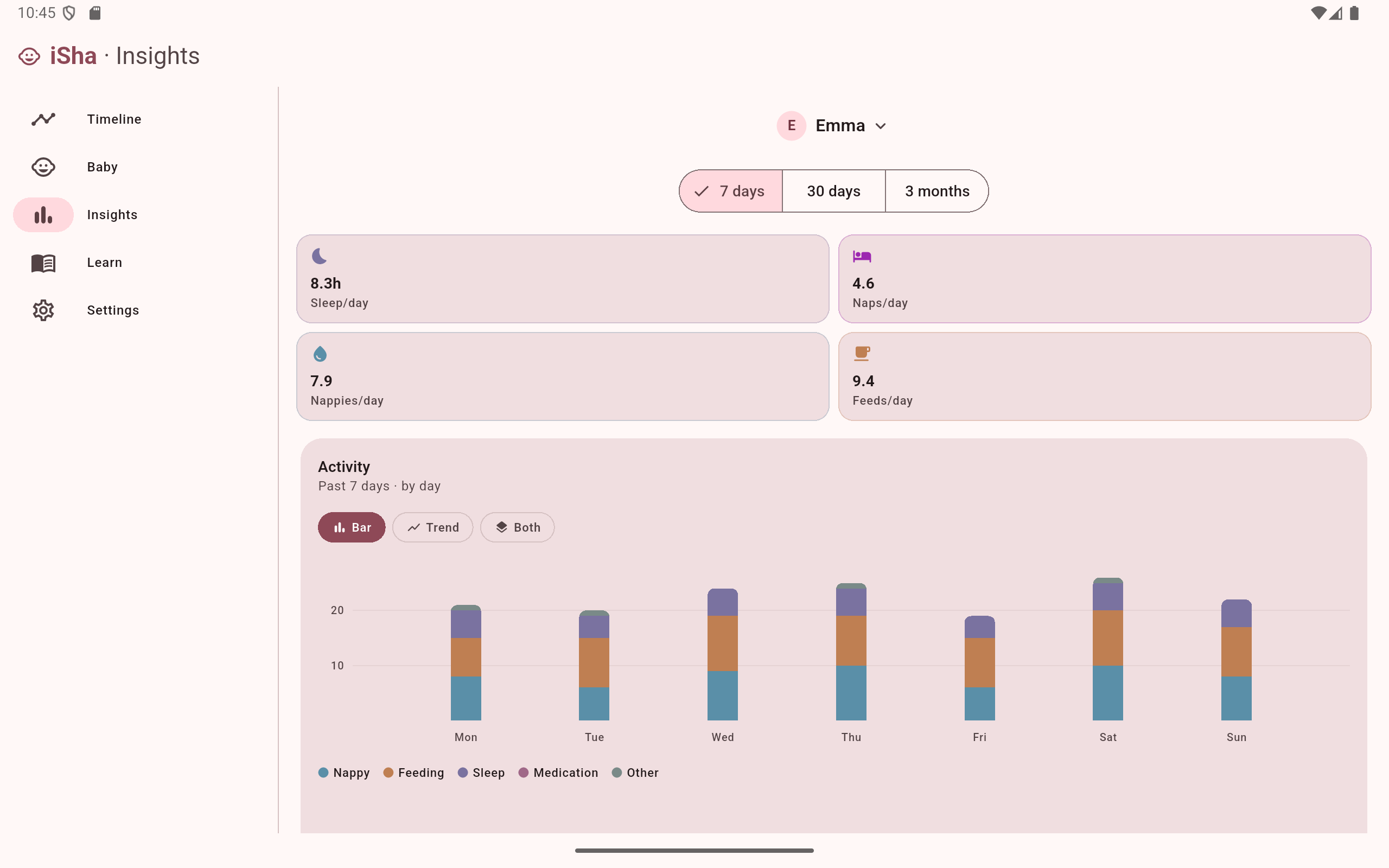
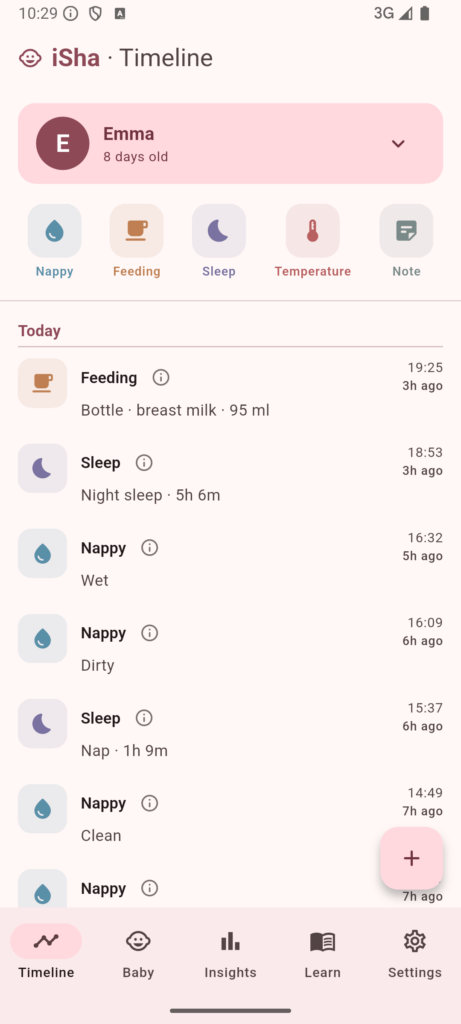
In the meantime, the app is ready for users. Here is a gallery that shows the application interface and features.
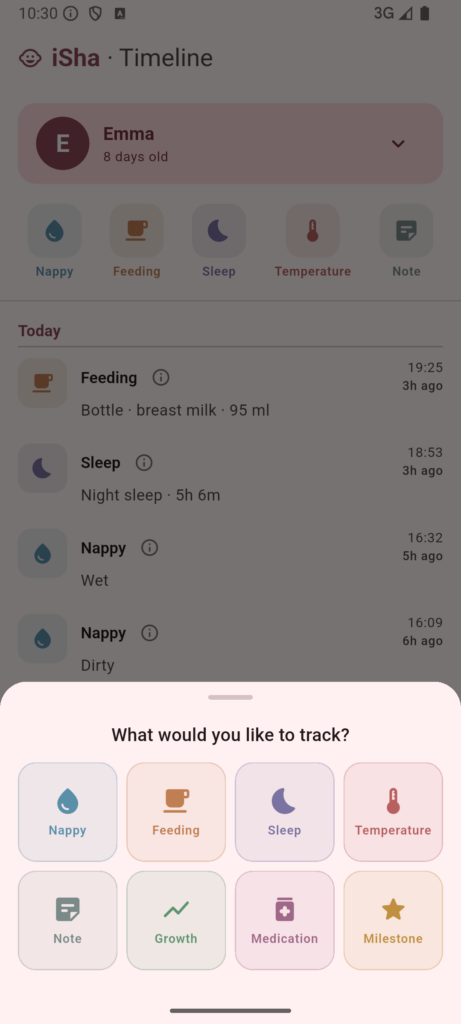
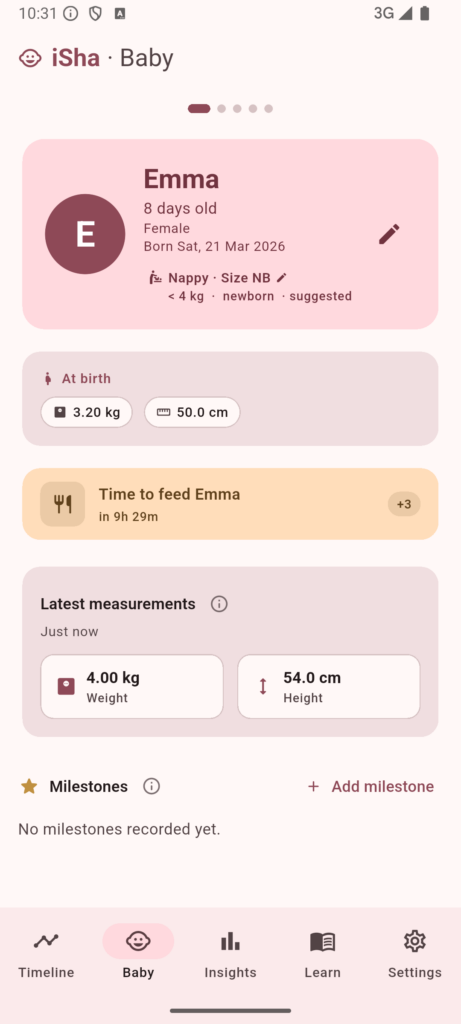
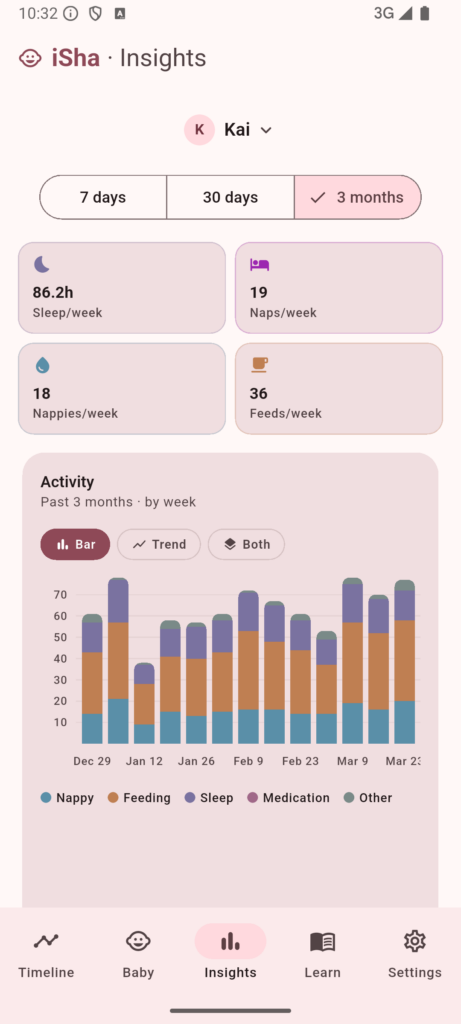
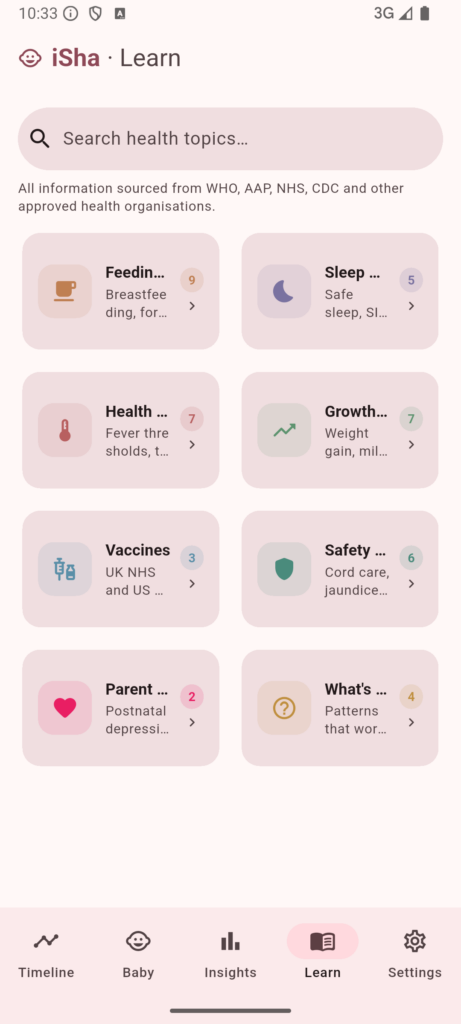
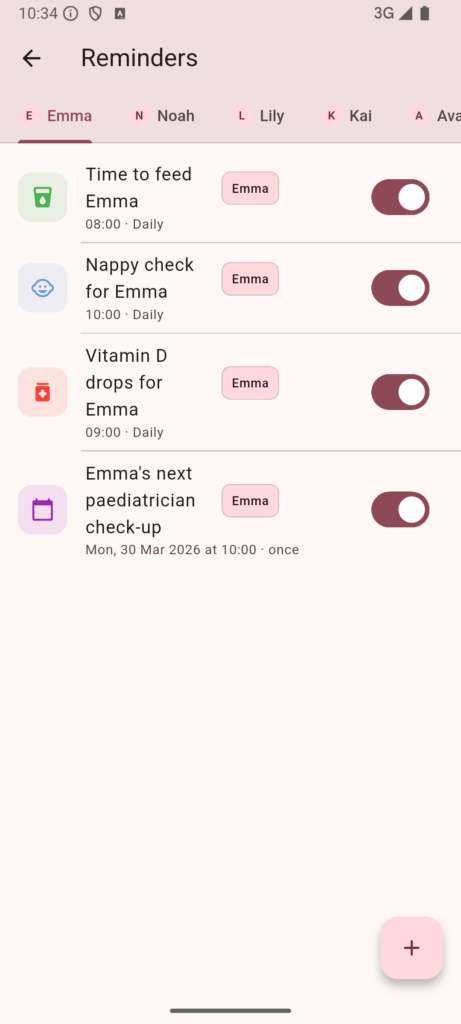
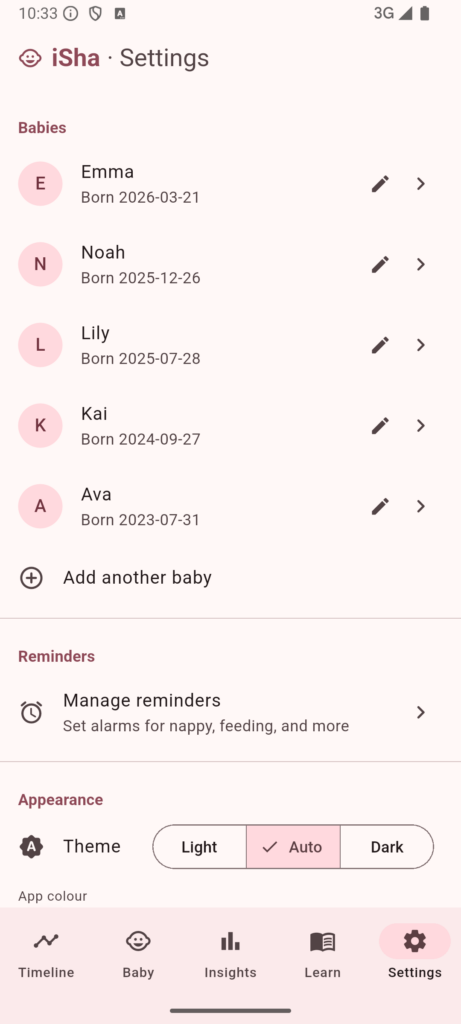
The application is also designed to support bigger screens (tablets for now).
Where to download?
You can download the app from the Play Store and the App Store. The application is available on Android and iOS platforms. It is a free application, of course, and is privacy-first by default.
The application is available on Play Store and App Store.
Please consider giving it a go, and share any feedback you may have. Any feedback, suggestions, questions, or concerns are welcome.
As is shared, the app is created by a parent for the parents and the objective is never to use the data of your babies for any purposes. Your children deserve the privacy, and the app will commit to delivering it.
-
I Voted: The Municipal Elections in The Netherlands 2026
This was my first time voting, and it was incredible.
Voting Process
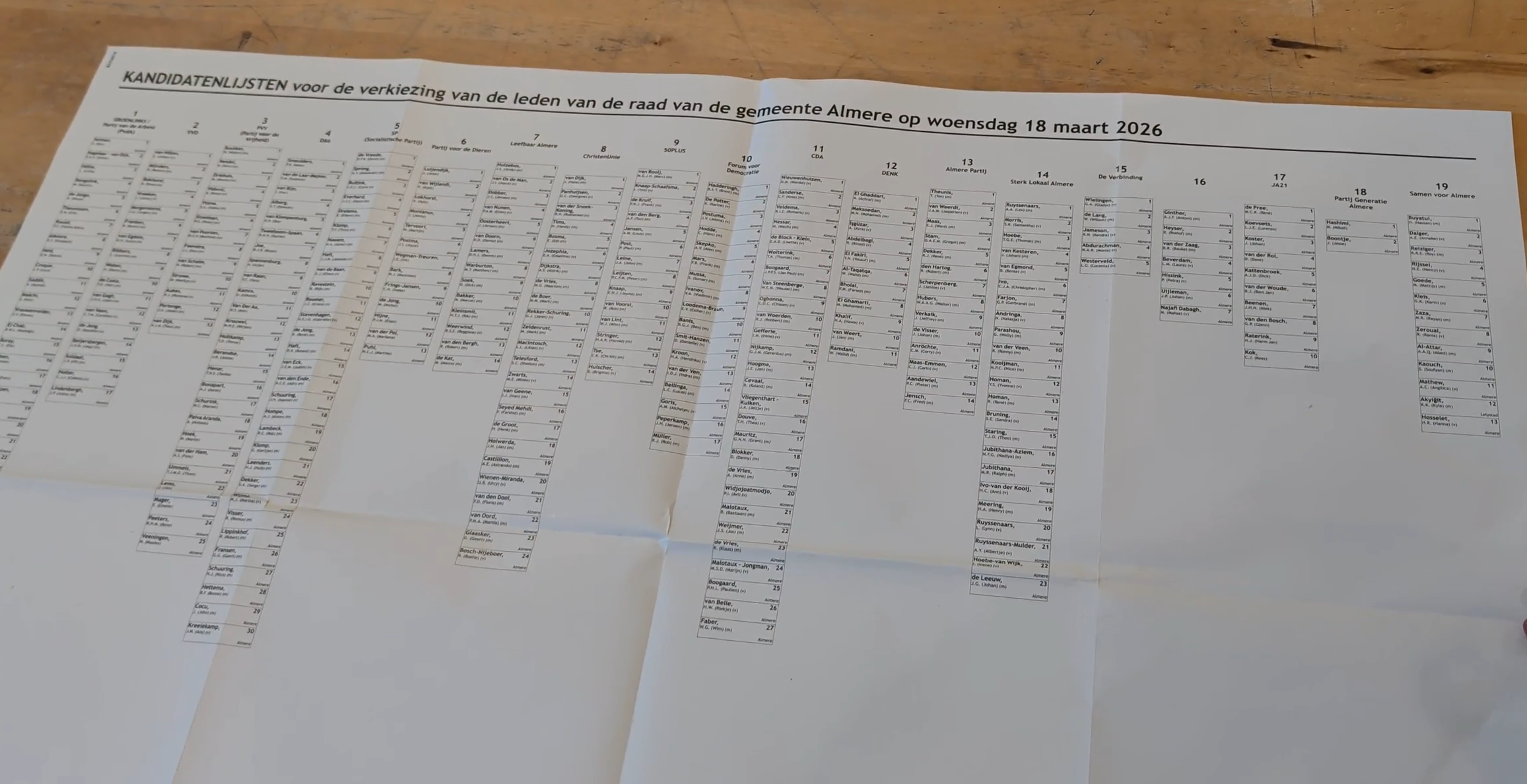
The ballot paper for the Almere council elections. I am a Pakistani, and I do not hold a Dutch citizenship. And as per the laws, non-Dutch citizens are allowed, and invited to vote for the local municipal (council) elections. The rules are clear and simple, for non-Dutch citizens, adults who have lived legally for the last 5 years can vote.
The invite is a voting pass that you receive, and if you are multiple people living at the address who qualify for the invite you will receive multiple invite passes.
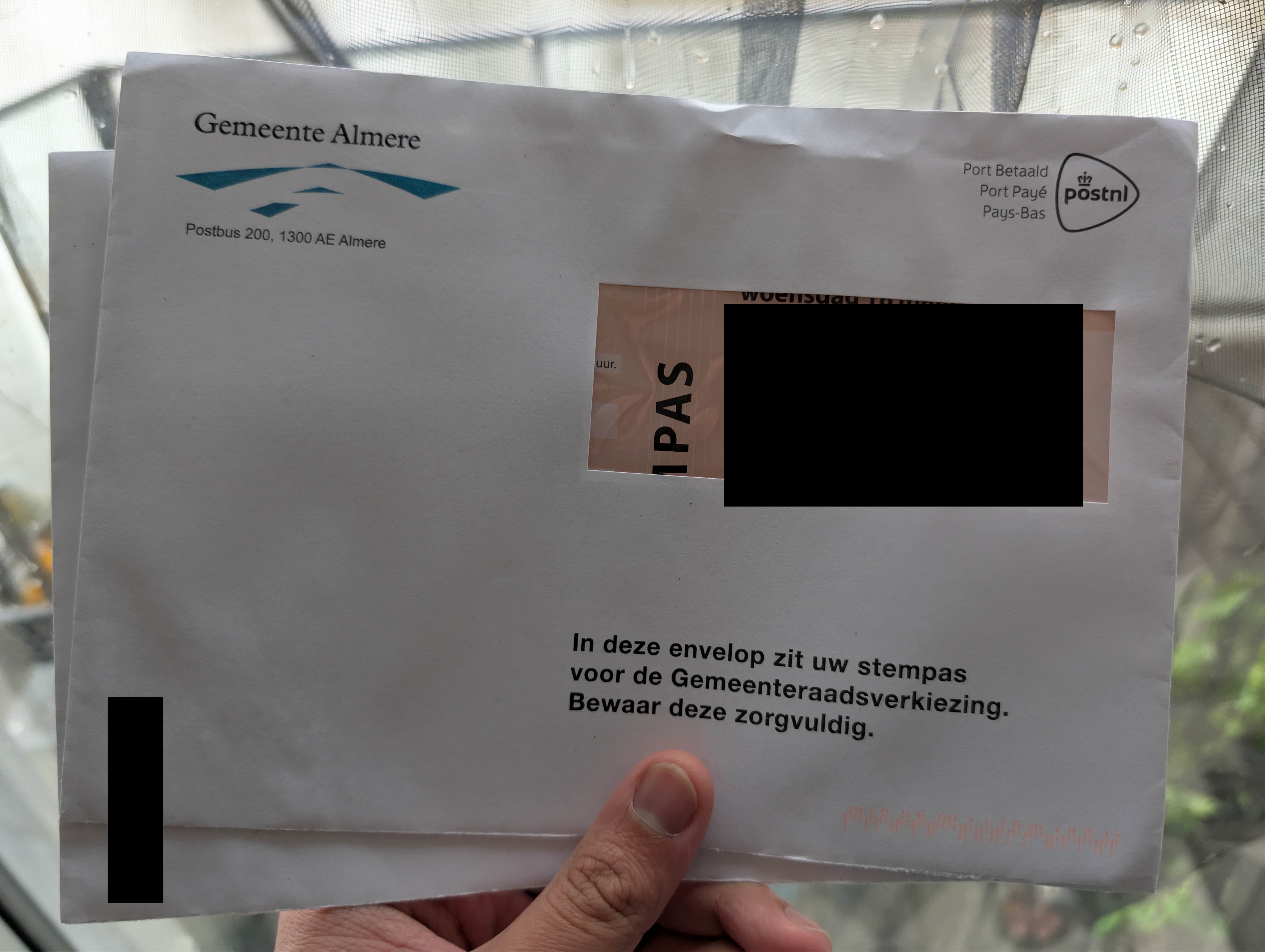
The invite passes arrive to your home address a few weeks before the elections. If you do not receive a pass, or if you lose it, you should request a new pass from your municipality. The election took place on Wednesday 18th March, 2026. The polling stations are open from morning until late at night (9pm in most cases). I visited the polling station after office, so about 6pm and it was a very simple and straight-forward procedure.
I visited the station, I handed in the invite pass and they checked my ID to make sure I am the right person casting a vote. Then they handed me a ballot paper. I headed to the voting counter, casted my vote on the paper and then dropped the paper in the “trash bin”. It was a very funny feeling that you drop your vote in a trash can.
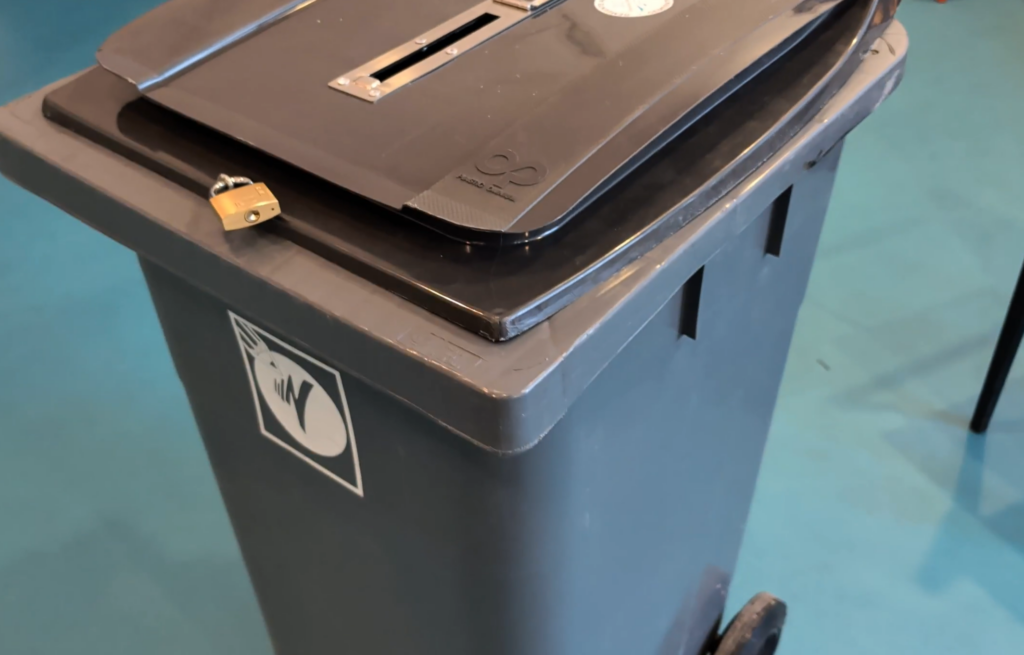
Dropping your vote in a trash bin was the funniest part. If you feel like you want to waste your vote by not casting it, consider dropping it in a trash can. And you are done. The entire process takes really short, and since the polling stations can be close by to your home you can just go for a walk with your children.
I found my closest polling station online, and it was less than 500 meters away from you. The website Where Is My Polling Station gives information about polling stations and you can simply find the station on the map.
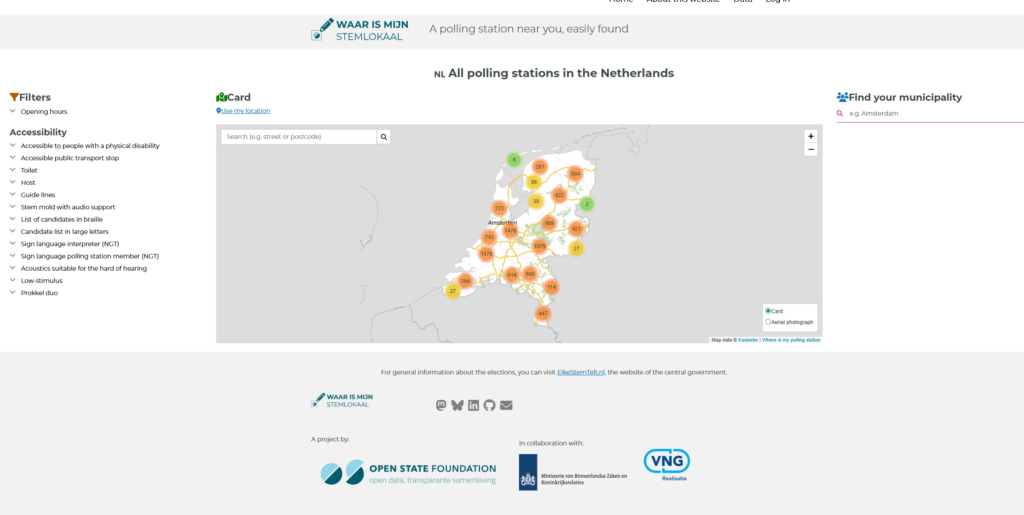
You can find the polling stations that are closest to your home online. The results take a few more time, but the results start to appear online and the leading parties are announced soon after the voting is done.
Be Responsible
While voting does seem like it does not really bring a change. The responsible thing to do is to cast a vote. Even if you cast a vote for someone who doesn’t have the biggest change on their agenda. If you believe in that person, go vote for them.
And for the winning parties, you have to deliver the dream you communicated.
-
The Vertical of AI-Driven Tech Stacks
Where do the AI-platforms exist in the stack vertical of an application?
Historically, we refer to our tech stack and base its sorting on how much a particular runtime/framework is going to be customer-facing vs internal. For example,
- A mobile application that allows users to save the links to read later and also share with others in their contacts.
- For such an application, you would automatically sort the frameworks by the mobile app, then any middleware or a mobile-backend.
- If you write your own backend and business logic, then you would add that as well.
- A web application that allows users to track their monthly grocery expenses.
- The framework by default gets priority; .NET, Spring, or some other web application development framework.
- Even though you do build an interface for the customers to use, you put it secondary, because your business is around the API and not the way that this list is communicated to the customers.
- A B2B API gateway that allows one company to manage fulfillment services for another company.
- You would put multiple frameworks as a priority and a must have.
- You would avoid onboarding an engineering that does not have the big picture in their mind.
Imagine these three organizations; technically, they all have a backend, a “frontend” and a data storage. The infrastructure would have firewalls for security, load balancers for optimization, and what not. But, it doesn’t take away the fact that each of these services has a server that processes the business logic, an interface for the customers and clients to access the services, and a central storage where everything is kept for the time it is needed to be kept.
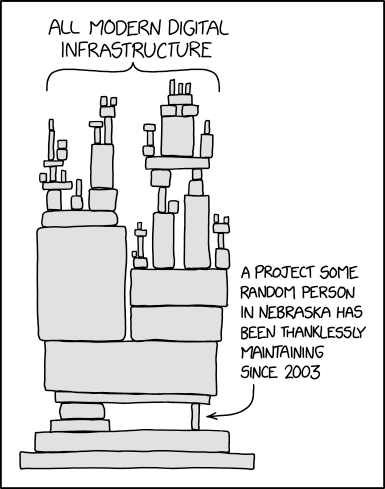
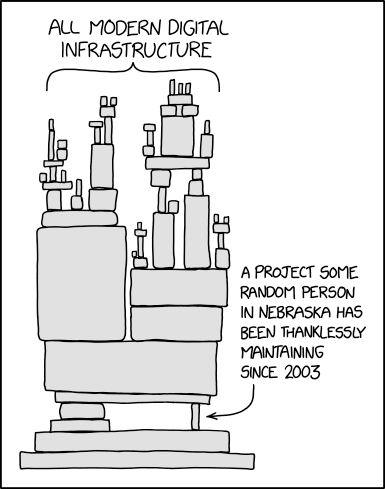
The famous dependency diagram of the frameworks and how our infrastructure stands. Tech Stack Communication
Nobody writes IIS, or Apache, or other server components in their tech stack. Why? Is there not a “production-ready” server that must be communicated to the customers? I can understand hiding the version-specific information in some cases to prevent bad actors from misusing, but it’s well known that most Microsoft-based web applications are hosted on IIS and others on Apache (PHP, Java, etc.). So why is it that the most crucial piece is left out?
The important point to remember and consider is that it is not the Apache server that the engineers and developers are going to program and write the business logic on. It is infact the underlying server-side code framework that they will need to program. ASP.NET, Spring, Express (or even Node.js in some cases) is the actual layer that your developers will most concern with. That is why, it is important that you have someone who is an expert in ASP.NET or Spring, and not someone who is great at IIS or Apache Tomcat.
The top reason that comes to mind for the tech stack communication is:
- To make it easier and simpler for the next engineers to onboard and expect the tech culture of a project or a team.
- It is entirely true and possible that two teams in the same organization have different cadence for release, a different culture for git-blame, a special way of writing and accepting the changes.
- To make it clear and reasonable why certain development tooling choices were made and how they contribute to the overall ecosystem of the technical products.
When you share the tech stack, you are also exposing your own preferences as to what you believe is important and what is less important. When you say that your application uses:
- Flutter, TypeScript, Firebase, Git
You are explicitly making it clear to any reader that you are not going to compromise on Flutter for app development, TypeScript for backend development, Firebase for mobile-backend (database, authentication, analytics, etc.) and Git as a version control system. For everything else you are open. For example, in a mobile application we would need to use a state management system. In Flutter, we can use either the native state management support or use provider and other complex state management systems. Flutter does not force us, and by keeping this hidden, you are indicating that this is up for a debate. If someone has a better idea and approach to managing state across application UIs, then that’s up for a discussion.
Now that picture starts to look a little focused and communicated.
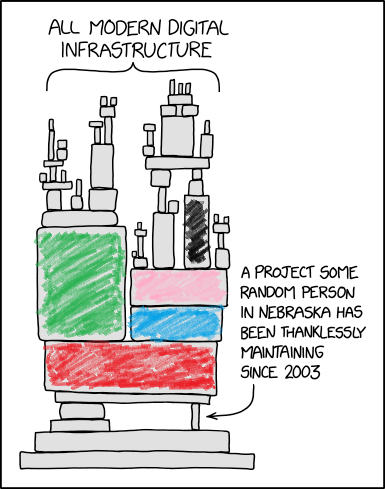
The dependency graph is colored to denote how focus is given on the core frameworks, and everything else is just drawn upon it. Each colored section represents a focus point in terms of tech stack. You are able to put blue and green blocks because the red block supports that. And the pink block is supported by the blue block and so on and so forth. In order to swap the pink block, you would need to ensure the jigsaw puzzle is solved between the blue block and the next colored block (orange, for example). And that would also have an impact on the blocks above and so on.
AI-Driven Tech Stacks
All of sudden, as vibe coding platforms emerge, we see a plethora of SaaS and job opportunities all listing these frameworks at the center, right, and left. We see the mention of Replit, Codex, Lovable, etc. as the primary tech stack and then other languages and frameworks emerge. The main reason behind this is that now the primary investment was made to support the development around these vibe platforms.
Is “vibing” a framework, a platform, or something else?
Now, the whole scenario of a project being built with .NET framework, or Next, or MEAN stack app is that you want to communicate the most important aspects of a project. In a .NET application, the most important component is definitely the .NET stack, and you need to have the audience understand that they need to be hands-on with .NET framework and understand different dependencies, lifecycle events, and more. For a MEAN app, you need the developer to be hands on with all–database, UI, and the backend API layer.
With that, I believe the reason the “vibe platform” is communicated is to define strict expectations that the platform is primarily developed using the “vibe platform” and you must have the skills and basic understanding of getting the “vibe platform” to work.
Example scenario:
I work with my brother on various projects. He is a skilled frontend engineer and knows his skill. He is hands-on with UI/UX requirements, accessibility, and what-not of the frontend world. But when it comes to the backend engineering, he is a null. He can use Node.js (mainly because of JavaScript) to write the backend layers but he is not hands-on with other frameworks because he does not think “backend”. .NET, Java, or other backend-heavy frameworks and platforms can easily throw him off. If I were to ask him to work with me on a project he would first ask, what is this app written in? If I respond with .NET, he can already get an idea of what to expect. If I say, Flutter, or Node.js, he can again get an idea of what to expect.
The point is, an application is not just the framework that is being used to write the business-logic, but it contains layers over layers of services and runtimes that make it function. But, those layers and services can be replaced. An IIS web server can be easily replaced with an Apache alternative, or a Redis cache can be swapped for a memcached or an alternative; the swaps would definitely be challenging in their own sense.
When I was working on Distant Ride Fail, I explicitly told him that I would be using Unity and, with this alone, he was informed that the project would use C# as a language, and everything that comes with it.
Conclusion
I believe, the addition of a vibe platform demands that we consider it one of the most important frameworks (if not “the ultimate” most important framework). If you develop your applications using vibe platforms then it makes sense and is only fair that you communicate this to the onboarding engineers and developers.
I have seen several posts and opportunities on LinkedIn or freelance platforms such as Upwork where the founders clear communicate that they expect some skills with AI-driven or vibe platforms. And that is a great thing–even though I am personally not a viber. And that gives me an idea that I must avoid these projects as “thar be dragons”.
- A mobile application that allows users to save the links to read later and also share with others in their contacts.
-

I Created This Mobile Game in a Week.
I recently published a mobile game that I developed in about 1-week. The whole plot was a rocket ship that is travelling and on the tap it flips the direction. My brother told me about this while we were playing Apex Legends and I created a Unity project before we went back to lobby and by the weekend, I had an early prototype ready for his review. The objective for me was to create a game that my daughter would love to play.
If you’re interested, check out Distant Ride Fail on the Play Store. I’ll appreciate that.
Distant Ride Fail
The whole plot of the game is a single-touch based mobile game. The whole objective of the game is to allow the user to use single-tap and help the ship cross the space. The space is infinite, and so the ship must traverse the area and avoid the incoming obstacles.
You can play the sessions unlimited numbers of time. You do have to restart the game session when you hit the obstacle.
Development
The game is created using Unity engine. The game is a simple loop of C# script that performs all the operations:
- Generate the obstacles and set their translation and rotation.
- Apply “wobble” movements to the rocket.
- Track the movement and collision.
At the moment there are no trackers or analytics in the game.
The game code obviously has scripts that do “one task”, such as “wobble” and “obstacle detector” are all different script that use the main loop and update the state of the game. I tend to write the game logic with state so that the UI only renders the processed state and data on the screen, while the background processes can continue to run in the background.
Assets and UI
I used the Low Poly assets for the mobile-based interface. Also, the UI was created responsive. The UI stretches to accommodate the different screen factors and sizes.
Instead of Unity Input System, I used the Rewired package to handle the input as I intend to expand the actions and handlers to other input providers (mouse and keyboard, controllers, etc.). I will write more on that once I have published the game on Microsoft Store as well. For now, the only input being handled in the touch input.
Publishing Experience
I have only published the game to Android and Windows platforms. In my experience, Apple is always a tough platform to crack and getting your app (or game) published.
The game is currently live on Play Store, and undergoing a launch on the Microsoft Store as well.
-
iDEAL Just Got Less Affordable on Wise.
If you use Wise to transfer money or even use Wise as a wallet for your money, you would need to rethink how to add money to your wallet. For the accounts in the Netherlands, iDEAL is a great way to transfer funds and make payments. Wise offers iDEAL as an integrated solution to transfer money between accounts.
I’ve been using iDEAL to add money to my Wise account and the main reason why I always chose iDEAL was:
- Very simple and easy UI
- Free of cost
While the core iDEAL service is still free and very simple. The ability to add money to your wallet via iDEAL is no longer free, and itis no longer a flat fee either.
How Expensive?
The amount you have to pay depends on the amount you are adding to your wallet. When you chose “External account”, you can add the amount you are transfering and then based on the amount you add a variable cost is shown. In the UI, Wise shows that the cost is not coming from Wise but from the underlying platform.
Here is a range of amount, fee, and total:
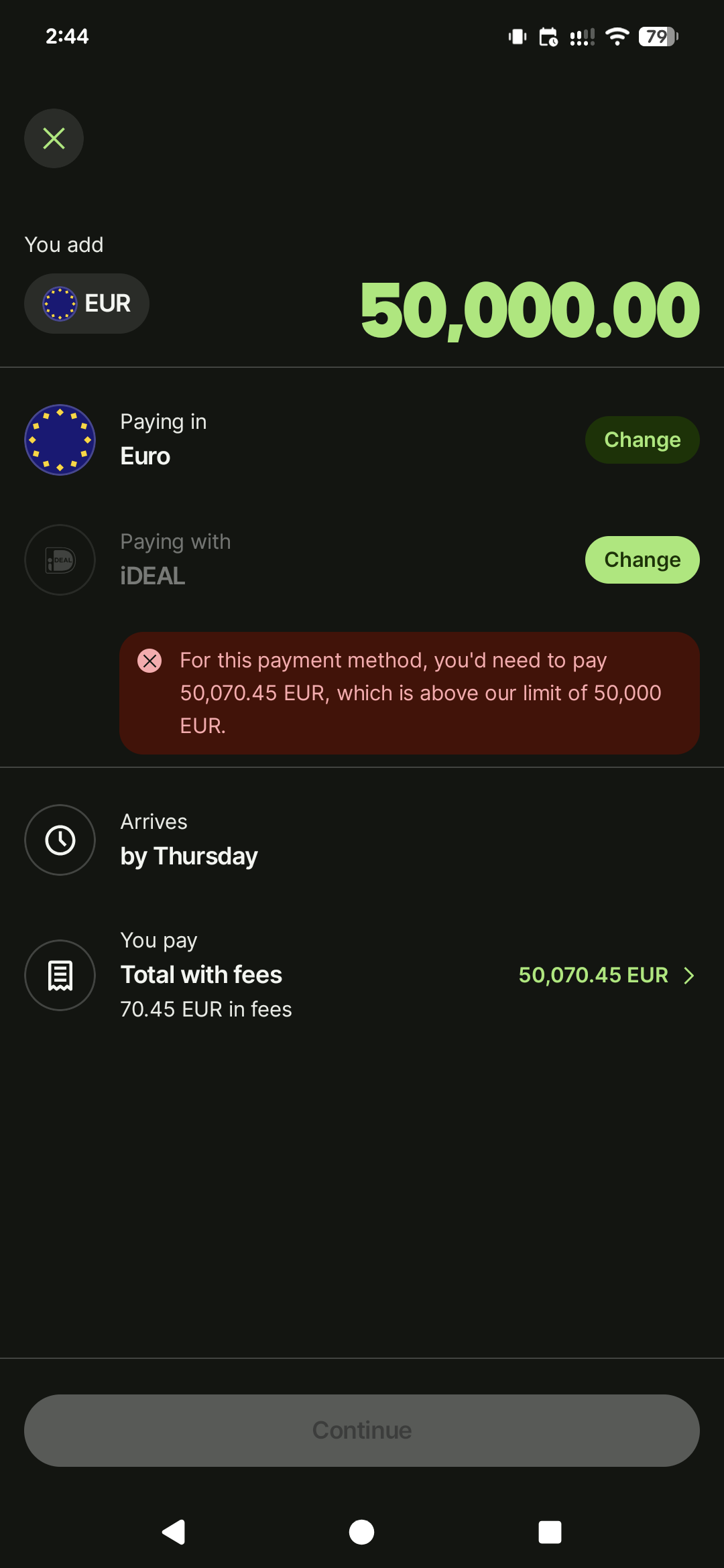
Amount iDEAL fee Wise fee Total fees Total 500 1.15 0 1.15 501.15 1000 1.85 0 1.85 1001.85 10,000 14.45 0 14.45 10,014.45 50,000 70.45 0 70.45 50,070.45 The amounts above are in euros. The maximum money that you can transfer using Wise is 50,000 EUR and this fee makes it impossible to add 50,000 EUR to your wallet.
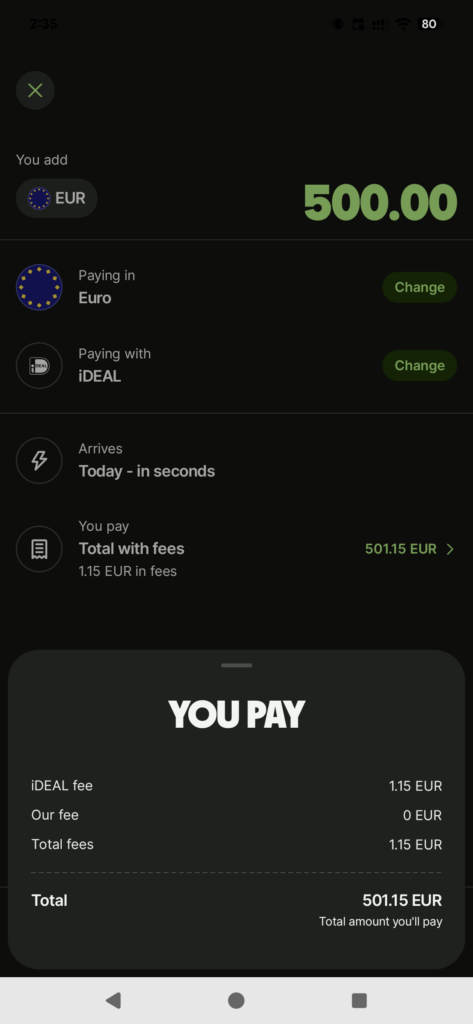
Costs for adding 500 EUR to Wise via iDEAL. 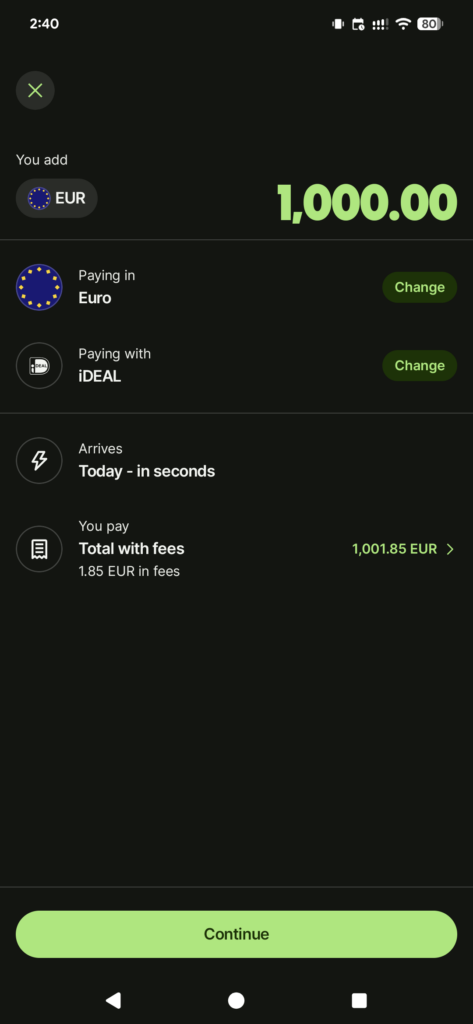
Costs for adding 1000 EUR to Wise via iDEAL. 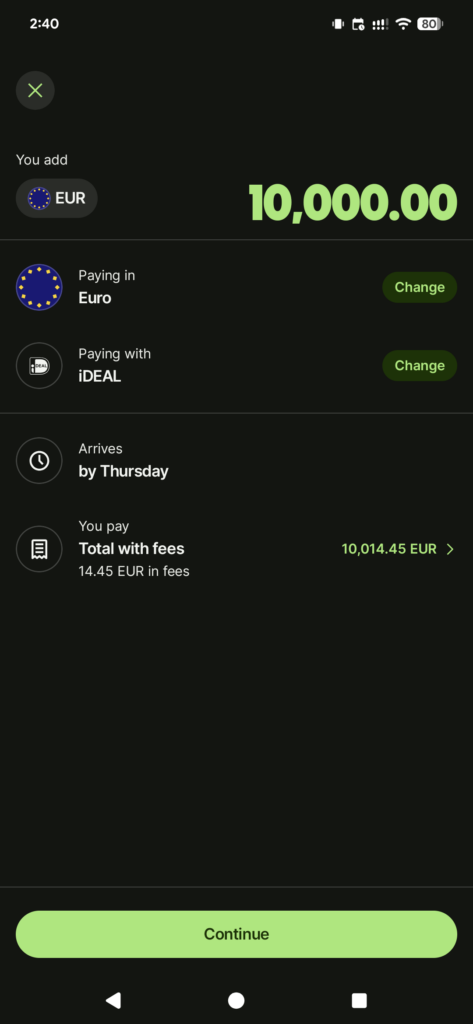
Costs for adding 10,000 EUR to Wise via iDEAL. 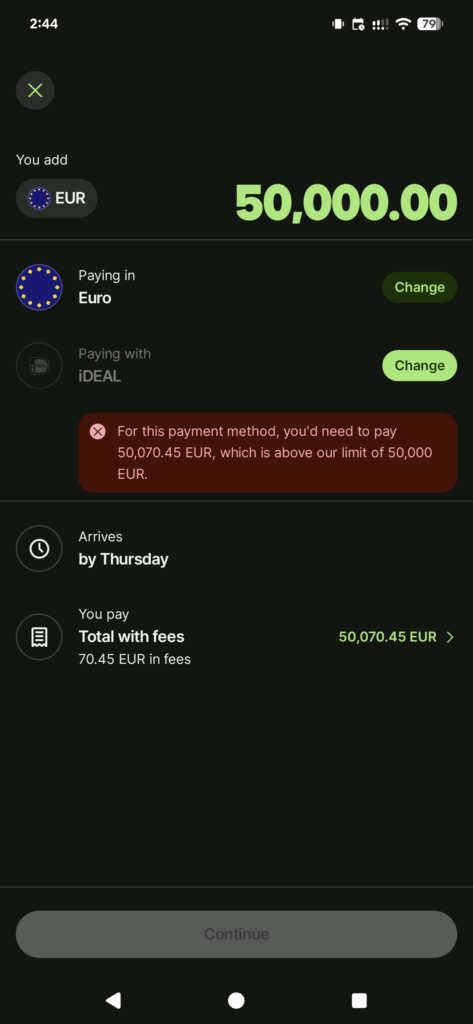
Costs for adding 50,000 EUR to Wise via iDEAL. 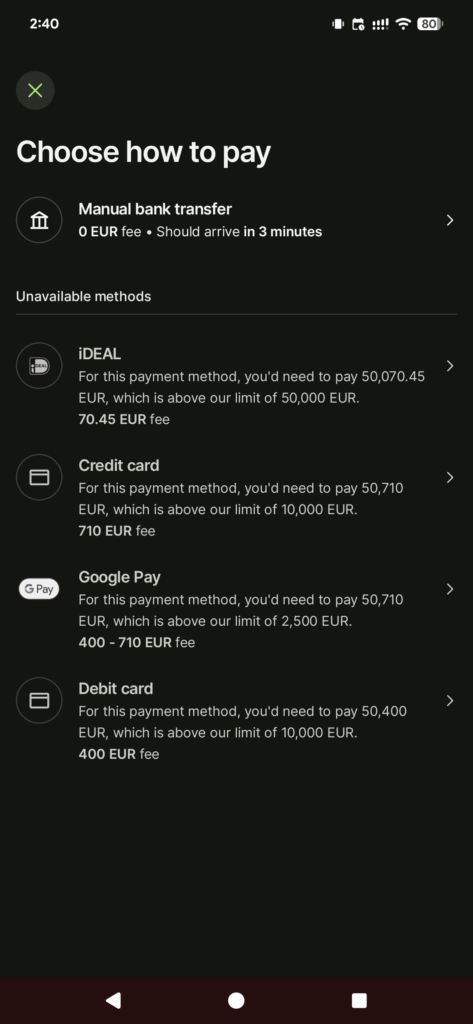
Alternative payment options available to transfer the amount to Wise wallet. I’ve honestly used iDEAL to always transfer the amount, and while iDEAL still offers free of cost payments, perhaps their costs were increased to transfer money. I have no idea why this change was introduced–or who introduced this change. But, I am not a fan of paying extra; are you?
Alternative?
Disclaimer: This is neither a sponsored post nor an affiliate content to recommend any party. The content in this post is from my own experience of using the platform.
When you are adding money to Wise, you can transfer using various methods. One of the methods is bank transfer. Wise uses Tink service to connect you to your bank (via application or online) and you can transfer the money directly through your banks’s application. Safely.
Note how the regular payment methods are:
- Extremely expensive.
- Not fast enough.
- Not available for big transfers.
As an expat, I do sometimes transfer about 5000-10,000 EUR, but not quarterly. And mainly only when there is an event or a plan. In such cases, every extra EUR counts. Look, I’m not against the fees. I understand the platforms also need to make money to pay for costs and expenses. But at least make some sense of the costs.
I haven’t actively used Tink, but I’ve transfered money via Tink a few times to Wise and the only hiccup is that it is a few extra clicks (taps) before you perform the operation and it takes a few more seconds before you receive the money in Wise wallet. Otherwise, sending 100 EUR and receiving 100 EUR is worth the extra wait.
-

Production Data Loss for twodos App: Minimal Impact on Users
The database for the twodos app was dropped because of a misconfigured environment variable, causing existing users to be logged out of accounts and unable to access their data for a while.
The problem has been resolved since and data has been restored. You can access the service here on twodos.app website or download the client apps.
Cause
The Docker image used for the deployment of backend API had an extra environment variable
NODE_ENVIRONMENTadded. The objective was to make the Docker image a development instance by default. On production, environment variables would be configured to override the development/staging values.There was a data layer code that reads this variable on app start up and purges all the data from the database.
The sequelize database being force created when the Node environment is development. This line was not gated properly and read a single variable to make such a big decision. The gate has been two-factored and an additional environment variable is now expected before the data can be purged making it difficult to enter this gate by mistake. Especially on production environments.
Impact
The misconfigured environment variable caused the database tables to be dropped with the data being truncated. This led all the existing users to lose the access to the application and the data that they had created.
This was detected first on staging environment and then was propagated to the production environment.
Resolution
The impact on existing users was minimal. The data is now recovered, and the application is performing normally.
To prevent this from happening again, the data layer environment gates have been two-factored to prevent single environments from purging the databases. Moving forward, to make such changes on a database, two variables need to be set that indicate the intention to remove or modify the data.
The data backup was used to rollback to an earlier version of the database.
Sincere apologies for the inconvenience caused.
The changes applied are part of a wider effort to make the application simpler, stable, and scalable on the UI-part. The changes in the API will make it possible to extend and improve:
- Users and account management, to allow easier account creation, login, sharing, and access management for privacy reasons.
- Lists and tasks management, to better expose the lists and tasks actions so that native platforms can compliment the data (add reminders, change the themes, etc.)
- State management of the application to make the application faster.
- Improved testing of the platform (API + app) to ensure the application performs and delivers what it aims to deliver.
We’ve received feedback from you all, especially around:
- Emails and tokens not being delivered.
- Application breaking (especially state management).
- Lists and the tasks management UI being unclear.
We’re moving slowly toward releasing the application with all the improvements deployed a) first to our API and then b) a new version of the app on the client platforms.
Thank you!
-

Aggressively Dominant AI-slop Content for Children. How to Avoid It?
I have a three-year-old. We never gave her a screen time until she was already 1 year old and even then it was slow-paced content that does not turn her into a zombie. Now, she knows how to play content via Google commands and it is often difficult to control her; but it was possible to control what she watches. Until about 4-6 months ago. The AI slop is destructive to your child’s development, brain development, and does not really teach your child anything.
I was watching content with my daughter when I realized that the content generated on this channel is actually extremely poor quality. Toby Town.
Disclaimer: I am not saying this is the only channel that has AI generated content (the “AI slop”), or poor quality content. There are so many examples of channels that generate content via AI and directly publish it to YouTube.
YouTube has recently started controlling and limiting the AI generated content, because, let’s be real. It’s plain stupid, lame, and sloppy. Sloppy on the content side and sloppy on the responsibility side of the creator. For me, the following three are the biggest concerns when it comes to the content. And before I share that, I honestly, do not care what my child (in a child-friendly manner) watches. If she wants to watch rock climbing, I’ll watch with her, if she wants to watch how to make buildings with magnetic tiles, I’ll buy a bunch of magentic tiles and build with her. What I would not accept is the content that damages her connection to the reality. And this is the outline or the boundary that I have set. So let’s take a look at why AI-generated content is wrong for your kids.
#1 Physically inaccurate behavior
Even in 2026, AI lacks a connection to the real world. AI does not know how objects behave in motion. Everyone is enjoying the ASMR videos of sun being cut into two, or how frozen nitrogen sounds when cut by a damascus steel made out of wood. When you read the statement, you can already picture different elements and know what is possible and what is not. If you are not able to differentiate between that from the sentence above, then perhaps, you can stop reading further. This article is not for you.
I gave Gemini this prompt and this is the video that it generated this video:

The Gemini-generated ASMR video lacks sense, but provides what’s asked and demanded. For fun, it makes sense to have such ASMR content. But for the kids who are learning every second, this video does not really teach them. And if you overstimulate their learning experience with such “fake” content, it is damaging to their development.
A child is still in the learning phase, and they need to learn what is possible, what sounds are there, how mass works, before anything.
My bike teacher told me the perfect one-liner: it is easy to learn, but it is extremely difficult to unlearn what you have learned.
The videos demonstrate such movement that will not be possible in this physical world. The little brains that are just learning how the movement works, are more likely to be confused by the AI-movement than appreciate it.
#2 Auditory and visual coordination
For starters, various videos do not have the audio and visuals match the scenario. The facial expressions do not match the emotion of the scene, the audio does not cue what may happen. Another problem is, time over time, I’ve seen videos where an audio and a video clips are merged together that do not belong together. Even if they are from the same publisher or creator, they do not match the on-screen behavior. A short example of this is, this video, where the on-screen content is a video about “BINGO the dog“, but the sound is about “boo boo song“.
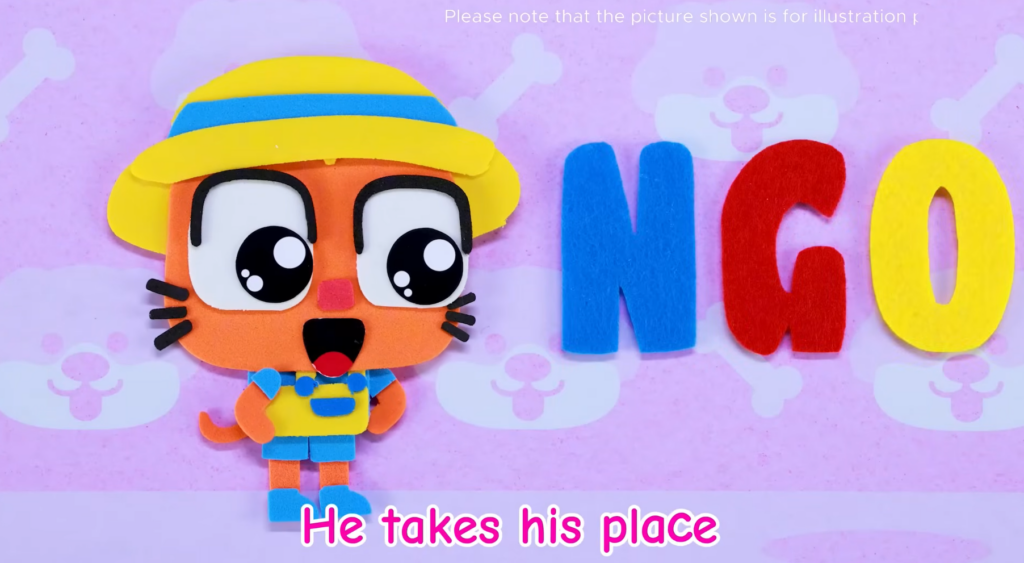
The AI slop is sloppy because it is produced with quantity in mind and not quality. The more you watch this content, the worse it gets. The captions say something else, the “speaker” sings something entirely different. There is a label on the top that again has nothing to do with the content on the screen. The content is a stop-motion animation.
And this is not the only example, this was actually the final straw where I decided that I needed to write this piece. You can look at this video and it shares the same story.
#3 AI doesn’t know how to cry
I have seen my daughter learn a lot from the content on YouTube. When I look at her building structures out of magnetic tiles, or when she demonstrates creating blobs out of clay dough, it makes me happy. I am happy that YouTube is a platform that can provide her a demonstration of “possible”. My daughter learned alphabets from YouTube, she sings along Ms. Rachel, she “claps her hands” with Super Simple Songs. At the end of a video, she has “done something”. Or at least she is building the neural network to be able to do something. The other day she was snapping her fingers at me.
AI-generated content will not be able to demonsrate this. You look at a child crying, or demanding something, and you can see there is a clear different between a child crying and a tantrum. AI content does not distinguish between these two.
Alright, so what to do?
When it comes to AI slop, I guess the only answer is to avoid it at all costs. It is not helpful for your baby, and honestly, it is not help for you either. Your baby will not only be watching content that is not real, the baby will have a hard time differentiating what’s real and what’s possible (think of objects flying through other objects, just because AI thinks that’s possible).
Today, AI-generated content is not limited to videos with generated persons but also for cartoons. These cartoons often do stuff that is not practical, but also not ethical. Since the person (or studio) generating this AI content has only one focus: generate more content. They have no time for quality control or review. Often time they ask AI to further review the content or make it compliant, which the AI does so by adding a label. Even the label does not conform to the content that is actually in the video. A simple label via the simplest video editor would take less time, but the person generating the content has no interest in doing so. Because they are so lazy.
#1 Track what your child watches
I have not given my daughter a separate account, she has a shared account that I can check the history of. I review the content, and I often set the content myself that she would want to watch. Here is how it goes:
Me: “alright, let’s put some video on the TV, which one would you like to watch?”
She: “that one” — as she points to a video with highest saturation in colors.
Me: “nope, that is bad, how about you watch either this video, or that video, or perhaps the last video you really loved?”
She: *thinks a little and makes a choice* “this one, this one”
Me: *plays the video and watches “with her”*
Note that the keyword is “with her”. I don’t put the video on and then grab my phone. I watch the content so that she finds it equally interesting.
Notice how one of the reasons why CoComelon’s videos are less advised for younger children because of the color saturation; YouTube video. In my opinion, it’s better to let your child bump to “baby shark do do do” than this AI-slop.
#2 Downvote the content
YouTube is also locking on to the AI-generated slop content so that they can reduce the number of times it appears. I have not seen useful AI-generated content, yet. The most recent interesting AI-generated (or at least CGI) video was this rollercoaster video that I watched with my daughter. It makes sense to have this CGI or AI-generated content for such scenarios and I am okay with that. The difference is that the CGI generated content is at least reviewed before getting published.
I always downvote a video that reflects the top 3 problems that I’ve listed above. Even though I still receive a recommendation to watch the video again (or another similar AI-generated video). Over the last few weeks, I’ve seen and shown no interest in several videos that often have similar content repeated.
The content, I’ve experienced, continues to reappear but you can continue to avoid and skip the content. YouTube algorithm is very complex, but the amount of slop that is being created can easily fool it. The problem is not that AI slop is being created, the problem is everyone thought it was an easy way to get quick views, subscriptions, and start earning on the platform. This greedy push for monetization flooded the platform with such content. In December, YouTube actually started to fight back on this AI content and a lot of creators saw their content getting less and less views, to a point where some videos are just getting zero views (check Reddit, I don’t mean to point fingers at anyone here).
#3 Have the “tough conversation.”
Our children do not stop watching or consuming content just because we told them. They really need to understand what is okay and what is not okay.
What really worked for me was first telling what AI was (of course, not the whole machine learning course) and then tell why this was not useful. I demonstrated some examples where a baby is sliding on mud and there is no scratch on the baby’s knees. After this explanation, I would give my child a choice that would make them feel in control and in charge. I would decide on the options and they will make a choice.
And like everything else, this is a repetitive approach and you would need to repeat this behavior again and again. The AI videos would continue to show for a while, but your child does not have to watch them.
Did you need to have a tough conversation with your child regarding AI? Honestly, this conversation has been the toughest one so far with my 3-year old. I had to explain what AI is, to explain why she should not watch AI-generated content.
This was it for today, I’ll catch you in the next blog. And if you read until this, I have something to share. I am starting a newsletter on this website and would be sharing similar content in a recurring cadence. If you found this content useful, would you consider subscribing?
Or, let me know what I missed. I’d appreciate that.
-

Schengen Visit Visa Rejected? Should You Appeal or Apply Again? Do this. An Expat Guide.
A good resource to further read and learn about the Schengen visa rejection reasons can be found on this website (ticket2travel.world). In this post, I will not cover all the reasons for rejection because some of these can be personal and very serious. However, I will cover the most common reasons that they provide which are mostly because you did not provide good documents to support your travel or departure reasons. The notable reasons or the common ones are:
- 10. The information submitted regarding the justification for the purpose and conditions of the intended stay was not reliable.
- 13. There are reasonable doubts as to your intention to leave the territory of the Member States before the expiry of the visa.
So, you applied for a Schengen visit visa (maybe via the Dutch embassy) and your visa application was rejected because the visa officer was not convinced by your application, supporting documents, or other material that you are applying for the right visa category with the right documents. The visa rejection is not a red alert about you or your passport, it is just that based on your submission, you do not qualify for a visa. Once you receive the response, you have two choices:
- Apply again with fresh set of application and supporting documents.
- Appeal against the visa rejection decision made by the visa officer.
The decision you make does not impact the outcome you will have. You can receive a visa if you apply again (providing the right documents, and explaining the change in circumstances since you last applied) and you can get a rejection in an appeal if you still cannot convince the authorities or satisfy the requirements for the visa.
One example is: you say that you are travelling to the Schengen states to watch a football match, but your travel itinerary says you want to be in the Schengen states for 45 days, your financial situation does not support this, or you do not have work. In this case, the visa officer is likely to reject the visa application.
Note that your visa application is judged based on what you submit in the application (along with supporting documents).
Now, let’s fast forward, you’ve heard the bad news and you are ready to take the next step.
The easy way: Apply again

While a Schengen visa rejection decision can be appealed, it differs per embassy and country. Some countries have a transparent, easy, and smooth procedure to apply for an appeal, others, not so much. In all cases, you are always allowed to reapply. However, note that if you do reapply, make sure to:
- Review, study, and understand why your visa was rejected in the first place. Mostly, a visa is rejected because a document was missing, your plan was not properly communicated, or you did not submit enough supporting documents to prove that you would leave the Schengen states before the expiry of your visa.
- Apply with the supportive documents that you believe you missed or were not able to submit in the earlier application.
- Clearly communicate to the visa officer that you understand why the visa was rejected, and what circumstances demonstrate a change in the situation or compel the visa officer to make a different decision this time.
Reapplying is a new application. You need to make a new application, submit all the documents (including the visa application) again. You will need a new appointment, pay for any visa application fees, and then wait for the new decision.
Since this is a new application, the decision can be either a Visa approved or Visa refused, and you will receive the rejection reasons again. If you receive a visa, then you will receive a stamp in the passport that you can use to travel to the Schengen states. If your visa is rejected, then you will receive the reasons why the visa officer is still not convinced by the documents that you have provided to support your application.
P.S. I have not yet created an outline for applying for a Schengen visit visa or how to sponsor your friends and family for a Schengen visit visa. I will update this blog once I have published the blog.
Now, with the visa application rejected again, you can attempt to appeal against this decision.
The other way: Appeal
Appealing a rejected visa application is a way that not many take. Appeal is your right if you believe that the provided rejection reasons are not grounded, and that you provided enough material to prove and demonstrate to the visa officer why you should be granted a visa.
Note: This guide is primarily for visas applied through The Netherlands embassy for a Schengen visit visa, mainly for friends and family visit. For other countries, a different procedure may apply and the rejection reasons document would provide more information, such as where, when, and how to apply for an appeal. You can read more about appealing your visa rejection on the IND website. You can read how you can appeal a Schengen visa rejection.
An appeal is an official request to have your visa application decision reviewed. An appeal can take up to 6 months of time. If you would like to travel urgently, an appeal is never going to help you. Only appeal for a visa decision review if you have about 6 months to travel, or you can travel after 6-7 months without any impact on the travel or the reasons to travel. In the Netherlands, the appeal can be made:
- Directly yourself.
- Your friend or family (if you applied for a friends and family visa).
- A legal representative.
How to appeal?
You can submit an appeal directly to the IND and provide reasons for why you want to start the appeal procedure. IND will officially receive the application, and start the appeal procedure for your visa application. IND can provide you with further material that you can use to understand why the visa application was denied, and how you can provide supportive documents. IND expects further information, mainly written documents that prove the facts and statements. This can include any changes to the financial, personal, relational, social, or economic ties to your current country.
IND can request documents that they deem needed to proceed with the appeal. Once you submit the documents, IND takes the due legally allowed time to make a decision.
It is often a good practice to use a legal representative to start the appeal procedure with the IND. There are various reasons:
- The legal council is more experienced in the immigration laws and can better convey your message to the IND in legal terms.
- The legal council has most likely supported a similar client in the past and they know what the IND is expecting, and what you must provide to better support your case. Note that while you may think otherwise, every small or ignorable detail is important in making your case strong. For example, do you have social connections or responsibilities? They count.
- The legal costs can be covered if you meet certain requirements.
The legal representative can also support you in making a decision (the final decision is always your own!). So, you end up making an informed decision and not a decision in haste. Especially, if you are going to wait for 6 months to hear back from the IND, you want to make sure you submit everything so that you hear the good news.
Visa approved
If your visa is approved, you will receive a decision from the IND stating that your visa appeal was found well and that the decision is now reversed. You can use this decision to reapply for a visa. When you apply with the letter from IND, you have to submit your passport and pay the visa fees.
The embassy will stamp the visa in your passport and return it to you. You can then travel to the Schengen states using the visa.
Visa denied
It is equally possible that the rejection appeal also fails and results in the appeal being rejected and visa rejection decision being sustained. This is indeed sad. But it is possible.
If this happens, you can proceed and have the appeal rejection fought in a court where a judge makes a decision. This is the next step and the judge can rule in your favor if your provide facts and supporting material, but the rejection can also be sustained.
A Schengen visa on your passport can mean easy movement between the Schengen states and visit Germany, The Netherlands, Italy, France, and other countries and be able to have that EURO Tour you wanted. A rejection can definitely shatter those dreams, but you always have a choice to reapply or appeal.
Did you learn something in this post? Did I miss something? Let me know and I can update the blog to reflect the needed information.